Modified Bitumen Roofing: What It Is, What It Costs & How Long It Lasts
A multi-ply asphalt system with a long track record on commercial flat roofs. Here's how SBS and APP differ, how it's installed, and when it's the right call over TPO or EPDM.
Modified bitumen is one of the most common flat-roof systems in the country, and one of the most misunderstood. It's an asphalt-based membrane, but the "modified" part is what matters: polymers are blended into the asphalt so the roof stays flexible in the cold and holds up to heat and foot traffic. If you're weighing it against TPO or EPDM for a commercial building, here's how it works and where it fits.
What Modified Bitumen Is
A modified bitumen membrane is asphalt blended with polymers and reinforced with a polyester or fiberglass mat. Most commercial installations use two layers — a base sheet and a surfaced "cap sheet," often granule-coated for UV protection — bonded together and to the roof. Because it's built up from multiple plies, it's often grouped with built-up roofing (BUR). Our services page covers both.
SBS vs. APP: The Two Polymers
- SBS (styrene-butadiene-styrene) gives the asphalt a rubber-like elasticity. It stays flexible in low temperatures, which is why it's commonly chosen for cold, freeze-thaw climates like Northwest Ohio's. Its weak point is UV exposure, so it relies on granule surfacing or a protective coating.
- APP (atactic polypropylene) gives a more plastic-like, heat-resistant asphalt. It tolerates heat, sun, and foot traffic well and is most often installed with a torch.
Product details vary by manufacturer, so the manufacturer's specifications and your warranty decide which sheet is right for a particular building.
How It's Installed — and Why That Matters for an Occupied Building
- Torch-applied: an open flame melts the underside of the sheet to bond it. It requires fire-safety precautions and is most often associated with APP.
- Hot-mopped: sheets are set in hot asphalt, a method also used for BUR.
- Cold-applied: sheets are set in adhesive with no flame, though adhesives bring odor and ventilation considerations.
- Self-adhered: peel-and-stick sheets that need no flame or hot asphalt.
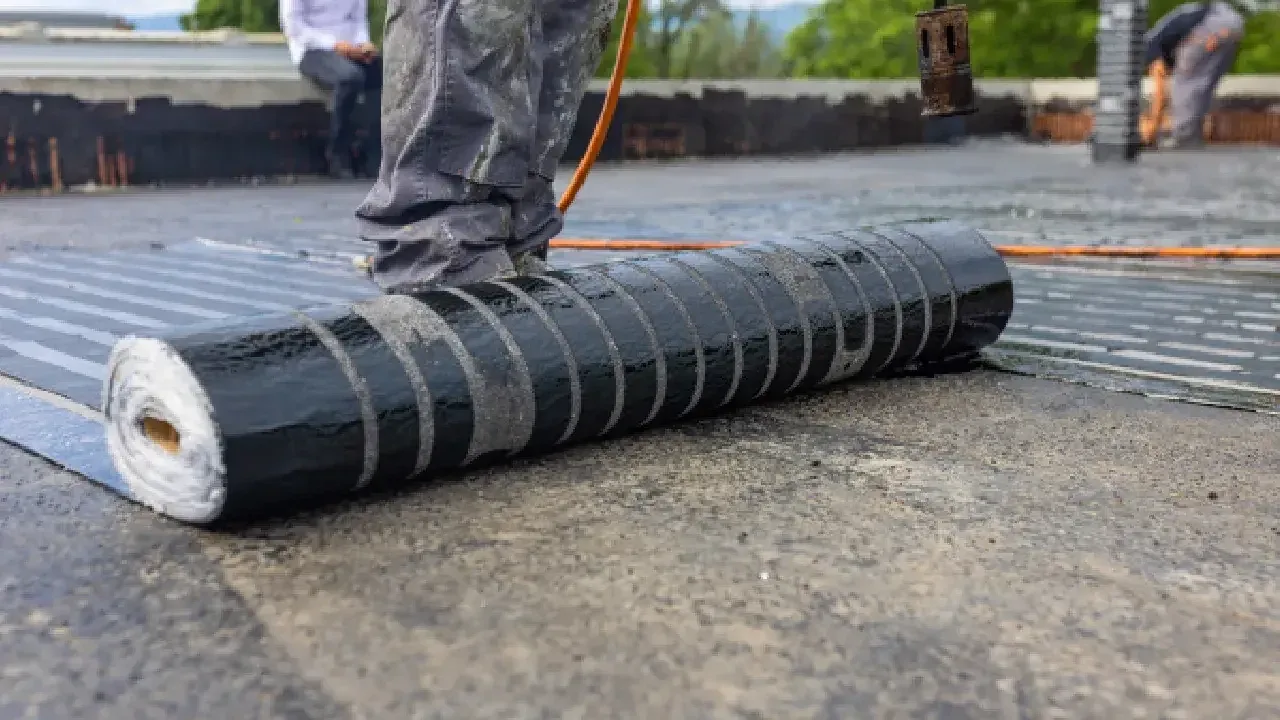
Flameless methods matter on occupied buildings, near combustible materials, or anywhere hot work is restricted. Here's how roof work can happen without closing your doors.
Pros and Cons
Where it's strong
- Redundancy. Multiple plies mean a single flaw is less likely to become a leak.
- Traffic tolerance. It handles rooftop foot traffic and equipment service better than most single-ply systems.
- Cold-weather flexibility. SBS formulations stay pliable through freeze-thaw cycles.
- Repairability. Damaged areas can be patched with matching material.
Where it falls short
- Installation is heavier work. It's more labor-intensive than single-ply, and torch application carries fire risk that has to be managed.
- Seams are laps, not welds. A heat-welded TPO seam and a lapped, bonded modified bitumen seam fail in different ways.
- Dark surface. Unless it's white-surfaced or coated, it absorbs heat. See how roof color affects cooling costs.
- UV wear. When surfacing granules wear away, the sheet underneath is exposed.
Modified Bitumen vs. TPO vs. EPDM
This is a general comparison — actual products and warranties vary.
| Modified Bitumen | TPO | EPDM | |
|---|---|---|---|
| Construction | Two or more plies (base sheet + surfaced cap sheet) | Single ply | Single ply |
| Seams | Overlapped laps, bonded by heat, adhesive or self-adhesion | Heat-welded | Adhesive or tape |
| Foot traffic & rooftop equipment | Excellent | Good | Good (varies with thickness) |
| Surface color | Dark unless white-surfaced or coated | White and reflective as standard | Black as standard (white available) |
| Typical life when maintained | Commonly quoted at 15–30 years | 20–30 years | 20–30 years |
| Typical installed cost (our market) | About $6.00–$9.00 per sq ft | About $6.50–$9.50 per sq ft | About $5.50–$8.50 per sq ft |
For the broader comparison, including metal, see our TPO vs. EPDM vs. metal guide. For pricing, see what a commercial roof costs in Ohio.
Where Modified Bitumen Fits Best
- Roofs with frequent rooftop access, mechanical platforms, or lots of equipment service traffic.
- Buildings where redundancy matters more than lowest first cost.
- Re-roofs where the building already has a bitumen-based system.
TPO or EPDM often make more sense on large, open roofs where reflectivity and the lowest installed cost are the priority. The right answer depends on the building, which is why we recommend an inspection before choosing a system.
Keeping a Modified Bitumen Roof Healthy
Check the laps and flashing, watch for granule loss and blistering, and keep drains clear so water doesn't pond. A reflective coating restoration can extend an aging system's life when the deck and insulation are still sound. Our inspection checklist covers what to look for, and our repair-cost guide shows what repairs typically run.
The Bottom Line
Modified bitumen is a proven, durable system, especially where traffic and redundancy matter. It's not automatically better or worse than single-ply — it's a different trade-off. Lifespan depends as much on installation quality and maintenance as on the material.
Choosing a Flat Roof System?
Get a free inspection and an honest recommendation — modified bitumen, TPO, EPDM, or restoring what you have — based on your building, not a sales pitch.